
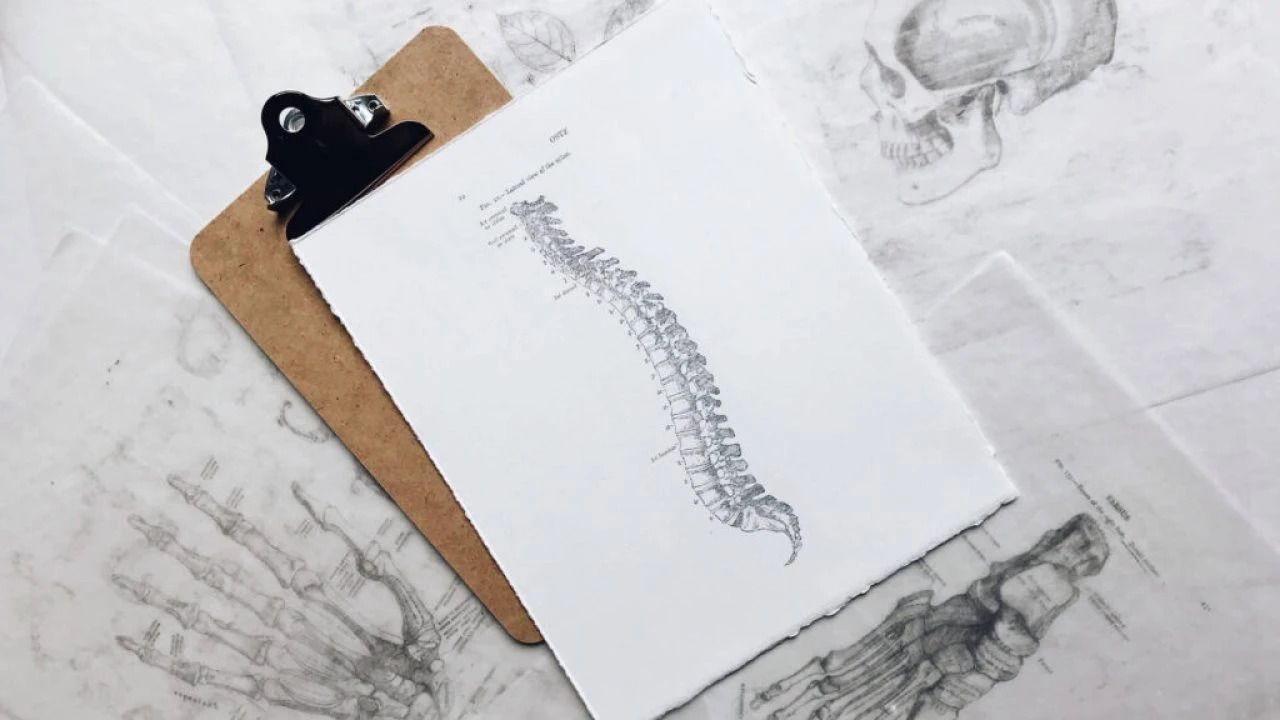
Spinal stenosis is a narrowing of the spinal canal, encountered most often in the lumbar and cervical regions.
Overview
Spinal stenosis is a degenerative process. Degenerative change in every structure that makes up the spine contributes to it, and in time the patient may be faced with a narrowed canal.
The principal factors in the narrowing of the spinal canal are:
- loss of water content from the intervertebral discs with age;
- enlargement of the facet joints;
- calcification of the ligament behind the vertebral body, compressing the spinal cord from the front;
- thickening of the ligament behind the spinal cord, compressing it from behind.
Types
Spinal stenosis is classified according to the part of the spine in which it arises.
- Cervical Stenosis
- Narrowing in the neck region of the spine.
- Lumbar Stenosis
- Narrowing in the lower back. This is the commonest form of spinal stenosis.
Symptoms
Patients in whom the condition is diagnosed may have no symptoms. Where symptoms do appear they are usually mild at first and worsen over time. The findings vary with the level at which the narrowing has occurred, with its severity, and with the nerves affected.
Narrowing in the Neck
- neck pain;
- difficulty with walking and balance;
- weakness and numbness in the arms and legs;
- loss of bowel and bladder function in severe narrowing.
Narrowing in the Lower Back
- back pain;
- weakness and numbness in the legs;
- reduction in the distance the patient can walk;
- back pain that increases on standing or walking for a long period and eases on bending forward.
Diagnosis
Magnetic resonance imaging (MRI) is used in diagnosis. Computed tomography (CT) is used in addition, or where MRI is not appropriate.
Most patients with spinal stenosis are over 50 years of age. The condition may be encountered in younger patients, but other causes must then be sought. These include trauma, conditions such as scoliosis, and genetic disorders affecting the development of bone and muscle. Imaging of the spine allows a decision as to which of these is the underlying cause.
Treatment
The principal aim of treatment is to open the narrowed canal and to decompress the compressed spinal cord and nerve roots.
In severe cases an operation may be recommended in order to create additional space for the spinal cord or the nerves. Rarely, untreated severe spinal stenosis may progress and give rise to permanent complications.